- Biology Department
- Pre-Health Advisory Committee
- GIS Center
- Medical Laboratory Science
- Museum of the Earth Sciences
- Mathematics and Statistics
- REALISE
- Chemistry Department
- Radford University Planetarium
- Department of Physics
- Anthropological Sciences
- Geology
- Selu Observatory
- Center for Information Security
- Forensic Science Institute
- Biomedical Science
- Geospatial Science
- School of Computing and Information Sciences
- MS in Data And Information Management
Chemistry, Biochemistry and Forensics
The goal of the Radford University Department of Chemistry is to provide a rigorous and inclusive undergraduate chemistry degree program. With six different concentrations to choose from, you can create the perfect schedule of courses to prepare you for your career goals. We are an American Chemical Society (ACS) accredited department, ensuring that you have the strong educational background needed to succeed as a scientific professional.
Graduate success defines our program and alumni easily find jobs in industry, while many have pursued graduate degrees in chemistry, biochemistry, forensics, materials science, medicine, dentistry, and pharmacy among others.

Programs of Study
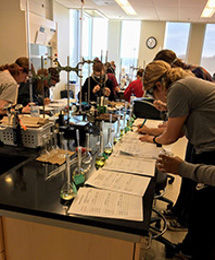
Student Research
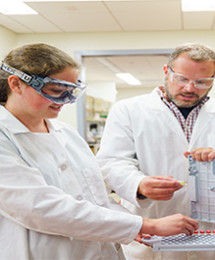
Alumni Success
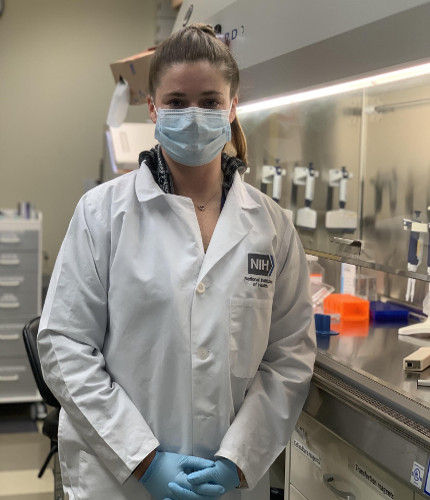
I love my position and I would not be where I am without Radford’s Chemistry Department. Every single one of the professors put their heart and soul into student success.
In the News

October 2022 - Elizabeth Lee and Kiersten Smith, both junior biology majors, presented their research at the 2022 Southeastern Regional Meeting of the American Chemical Society in San Juan, Puerto Rico. The research, done under mentorship of Dr. Tim Fuhrer, focused on the computional chemical analysis of a new form of fullerene-related molecule and their oral presentation was entitled “Molecular orbital study of a new class of large cage fullertube”.
More news