Strength in numbers: Local artists find solidarity at inaugural summit
by Neil Harvey
October 13, 2026
On just about every level, art is rarely easy.
Creating it in the first place requires an alchemic mixture of inspiration, skill and the ability to somehow harvest those indefinable ingredients that make a work truly special and unique. That alone is a tall order.
And even after that process is complete, there remains the task of getting the finished product in front of an audience. Drawing exposure is tricky enough in large metropolitan areas; it becomes harder still in rural regions and smaller communities.
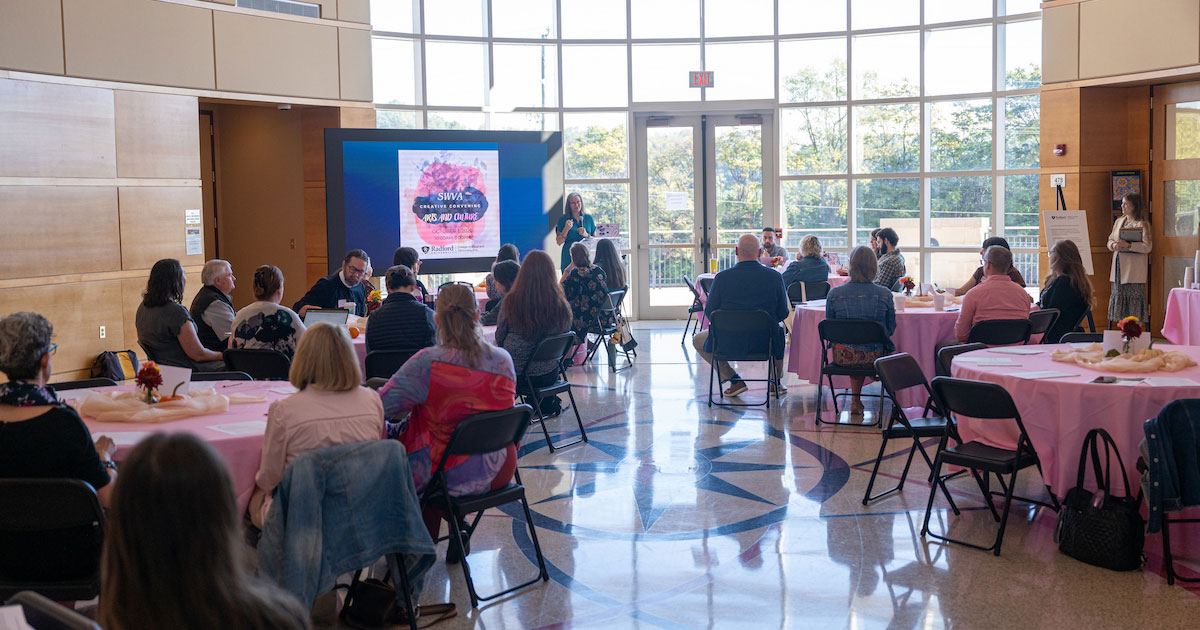
Radford University’s College of Visual and Performing Arts (CVPA) understands those challenges, which is why on Oct. 1, it launched the first Southwest Virginia Arts & Culture Convening.
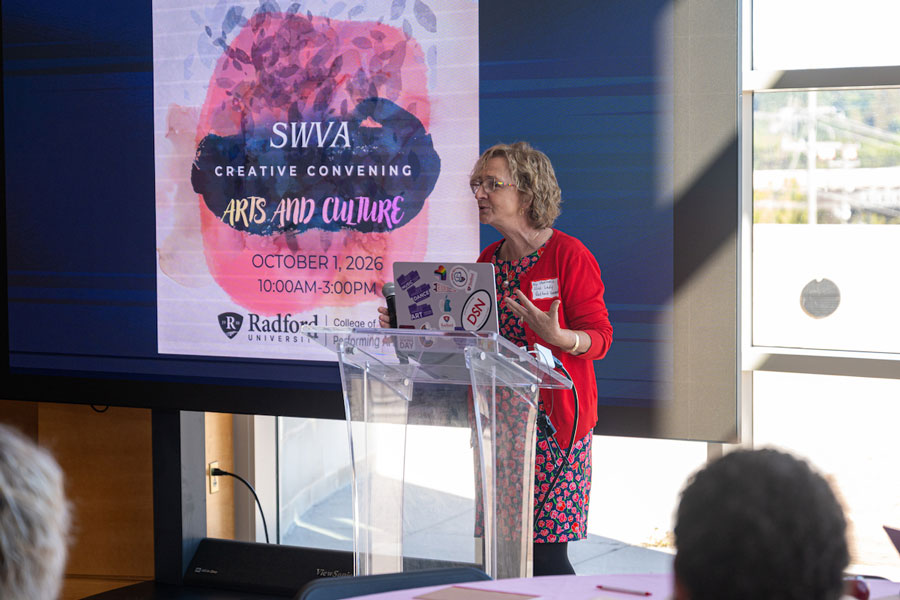
The event – held in the Douglas and Beatrice Covington Center for Visual and Performing Arts’ Scartelli Atrium and led by the CVPA’s Dean Rachel Williams – was a daylong gathering that welcomed representatives of dozens of local organizations from around Southwest and Western Virginia – places like Abingdon, Blacksburg, Floyd, Marion, Roanoke and Wytheville, as well as Montgomery and Wise counties.
It featured multiple speakers and workshop sessions that encouraged interaction and collaboration, idea sharing and brainstorming.
First Lady Kay Danilowicz, chair of Radford University’s Public Artists Committee, kicked off the event.
“I love the arts,” Danilowicz told the crowd of about 50 guests. “They remind us that we are connected to one another, to our histories and to the place that we call home. They invite us to see things a little differently, think a little deeper and imagine what is possible.
“When artists and art organizations get together, the impact is even more profound,” she continued. “We are honored to host this gathering; excited for the conversations, partnerships and new ideas that may begin here. And we hope you leave inspired, encouraged and connected by the creative energy that we have in this room.”
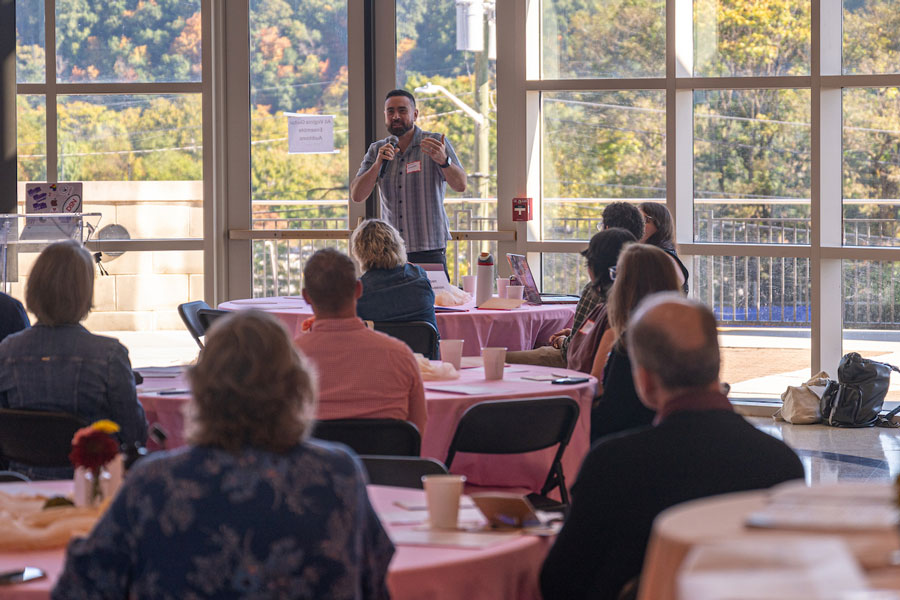
Geoffrey Kershner, a professor at Randolph College who is also the founder of Small Town Arts and Rural Arts (SARA), presented the morning’s keynote speech.
SARA is a program funded by the Virginia Commission for the Arts (VCA), which documents artistic efforts and seeks to unlock state and national forms of creative support.
In Kershner’s address, “Mapping the Future: Stronger Together,” he spoke of the challenges artists face in more remote areas, including limited infrastructure, volunteer burnout and the difficulty of accessing funding when organizations lack a traditional 501(c)(3) structure.
Some of his suggestions involved identifying existing local assets, reframing discussions of the arts and acknowledging the fact that smaller communities can have stronger and more resonant voices when they work together.
“One of the things that’s really amazing … is that I interview lots of folks in the state, and there are people doing great stuff, but nobody's seeing it or knows what they're doing outside of their own community,” Kershner explained. “And so that information, and how we’re doing it, is getting shared.”
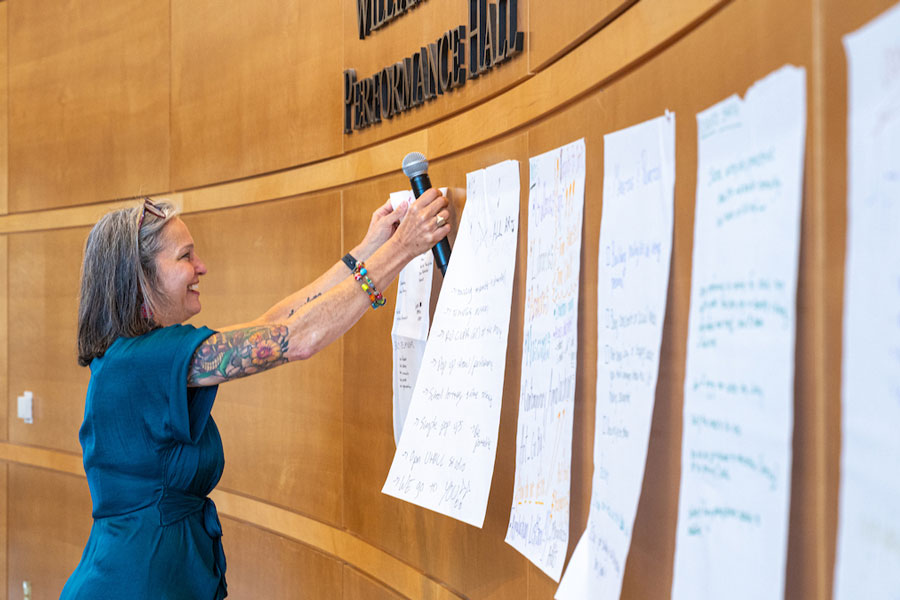
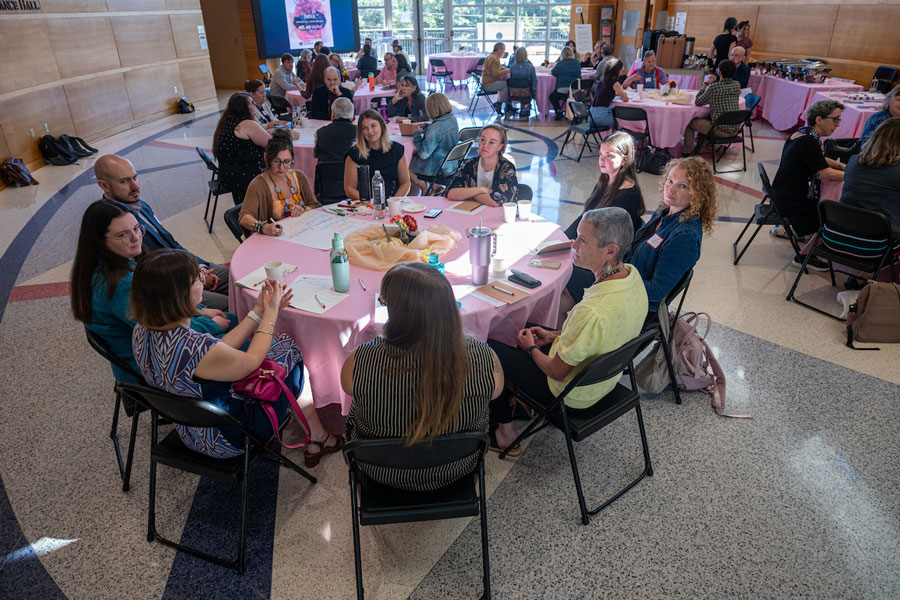
Between speakers, attendees found themselves with very little downtime. The event included two highly interactive small group conversations – one designed to survey resources that could be built by Southwest Virginia arts and cultural community leaders and another that explored local opportunities for improvement.
The latter exercise was broken down into themed tables discussing the topics of marketing and promotion; resource sharing; programming and partnerships; funding; artists, volunteers and workforce development; regional communication and connection; and crisis management.
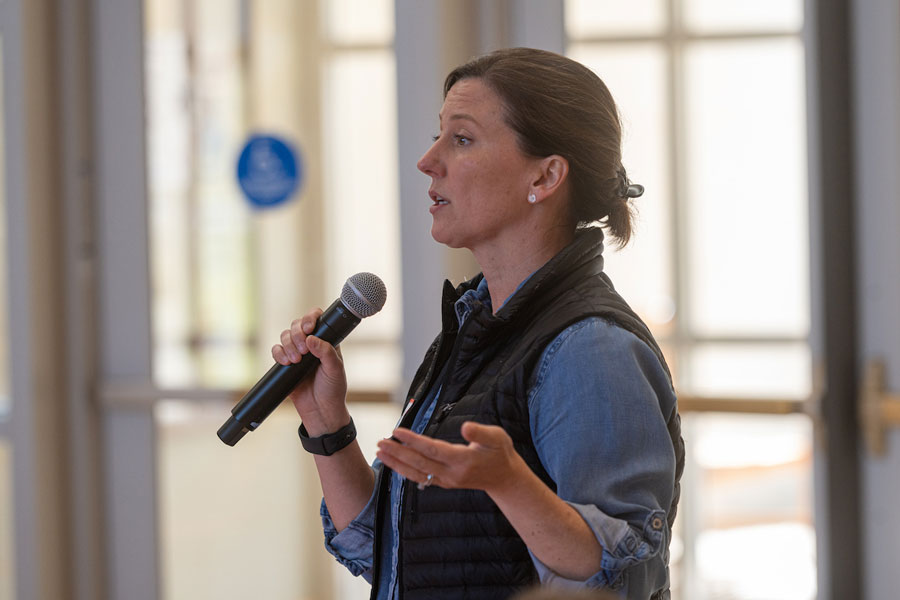
In the discussion of crises, Cari Koepplin, who is the grants and development director for the Roanoke Ballet Theatre, pointed to the effects of the COVID-19 pandemic, which she said “decimated dance artists."
“They lost spaces, audiences. The rug got pulled out from under this entire generation of practitioners,” Koepplin recalled. “We’re still feeling it.”
“I think that speaks to crisis shaping the art,” said Luke Haefner, the education manager for Roanoke’s Jefferson Center.
Koepplin and Haefner, along with people from each group, later delivered the results of their discussions to the entire group.
In the afternoon, three speakers gave presentations on the theme of building a new generation of arts leaders: Jess Ambler of Hollins University’s Eleanor D. Wilson Museum; Sara Thompto, owner of the city’s recently opened Paper Assembly House stationery store; and the manager of Radford University Art Museum, instructor Theresa Rykaczewski.
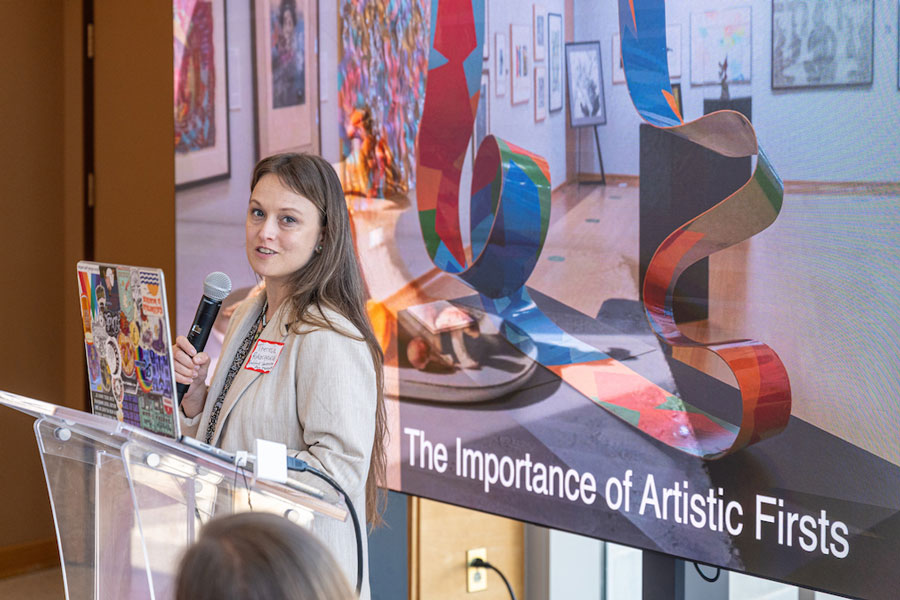
Rykaczewski in her talk urged the groups to consider their own “artistic firsts” – meaning those initial exhibitions, performances and other creative opportunities that typically open doors for fledgling creators. Those early accomplishments often create a butterfly effect, she said, that can lead to subsequent successes and influence the communities that surround them.
Her address drove home the notion that success can be measured not just by individual achievements, but by helping others move forward.
“We’re all in this together, and we all have a ripple effect,” Rykaczewski said.
In the days afterward, Williams reflected on the value of having so many dedicated arts and cultural leaders come together in one place for the summit.
“The conversations, ideas, shared challenges and collective aspirations demonstrated the incredible strength of our region and reinforced something many of us already believe: We can accomplish even more when we work together,” she said.
She said she and Thompto will synthesize the results from the event – notes, outcomes from the discussions and information about what’s next – with the hope that the group can continue to draw momentum from the day.
“We hope this gathering marks the beginning of an ongoing conversation rather than the end of one event,” Williams said, “and we look forward to helping nurture those connections and supporting the ideas that emerged from our discussions.”
Arts organizations represented at Radford’s Southwest Virginia Arts & Culture Convening included:
The Barter Theatre
Blue Ridge Music Center
Blacksburg Dance Theater
Blacksburg Regional Art Association
Center for the Arts at Virginia Tech
Chestnut Creek School of the Arts
The Eleanor D. Wilson Museum at Hollins University
Floyd Center for the Arts
Floyd Country Store
Grace Church, Radford
The James Wise Gallery at Norfolk State University
Jefferson Center
The June Bug Center of Arts and Education
Mid-Atlantic Arts
Mill Mountain Theatre
Millwald Theatre
Montgomery Museum of Arts & History
Opera Roanoke
Paper Assembly House
Radford Artist Association
Radford University Art Museum
Roanoke Arts Commission
Roanoke College’s Olin Hall Galleries
Roanoke Cultural Endowment
‘Round the Mountain: Southwest Virginia’s Artisan Network
Selu Scenery Plein Air Workshops
Small Town & Rural Arts Network
Southern Appalachian Dance Collective
UVa Wise Pro-Art
Virginia Department of Housing and Community Development
Virginia Tech, College of Architecture, Arts and Design
Virginia Tech School of Visual Arts
Virginians for the Arts
William King Museum of Art
Wytheville Community College