Lt. Gov. Hashmi examines Appalachian literature and culture in lecture
by Joel Newman
September 30, 2026
The land and the people of Appalachia are far more complex than they are often portrayed in fiction. They exist in a liminal space – in between the ancient and modern, affected by broader social and political forces but also shaping them. The people often rely on deep connections of family, community and cultural tradition to address otherwise unmet needs.
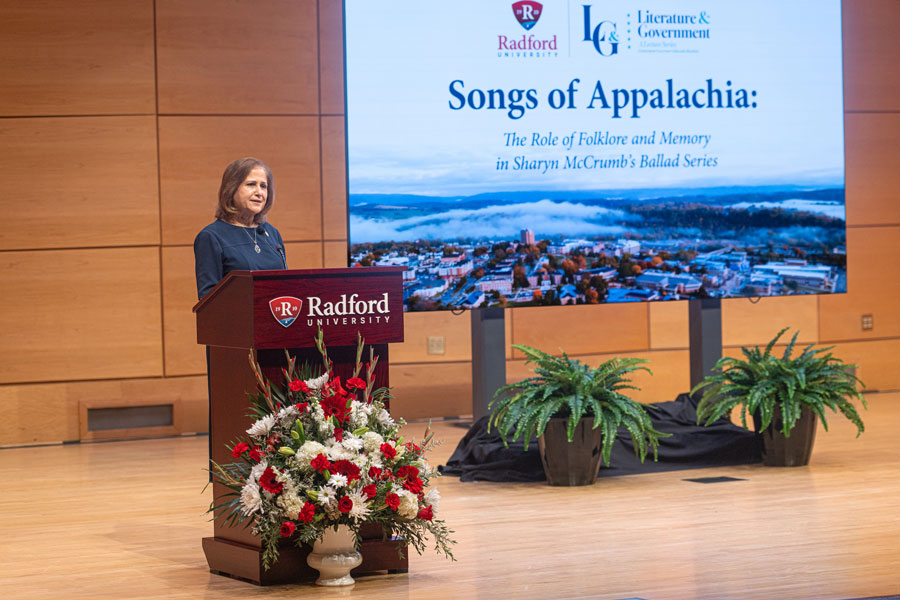
Ghazala Hashmi, Lieutenant Governor of the Commonwealth of Virginia, explored these themes in a lecture featuring the work of novelist Sharyn McCrumb. She spoke at an event held Sept. 23 at Radford University, one of a series of discussions she is hosting at colleges and universities around the state focused on the intersections between literature and government. The event drew nearly 200 attendees.
Hashmi drew upon McCrumb’s depiction of Appalachian towns and rural areas in the novels The Hangman’s Beautiful Daughter and She Walks These Hills. These communities are insular, neglected by and skeptical of broader government and economic interests, deeply rooted in folklore and the connection between the living and the dead. Decades of industrialization have damaged the environment in these places. Effects of war and societal trauma are shared and passed through generations. The novels, Hashmi observed, prompt the question, “What happens to the people when the institutions that are supposed to care for them are distant or absolutely unavailable?”
These works, Hashmi added, also portray the resilience of the Appalachian people – through volunteerism and the knowledge and caring or local authorities, through storytelling and shared memories, and through the enduring sense of place and continuity offered by the mountains as generations pass through them. “Both novels ultimately suggest that resilience is not simply individual strength but a collective ability to remember, to adapt and to endure,” she said.
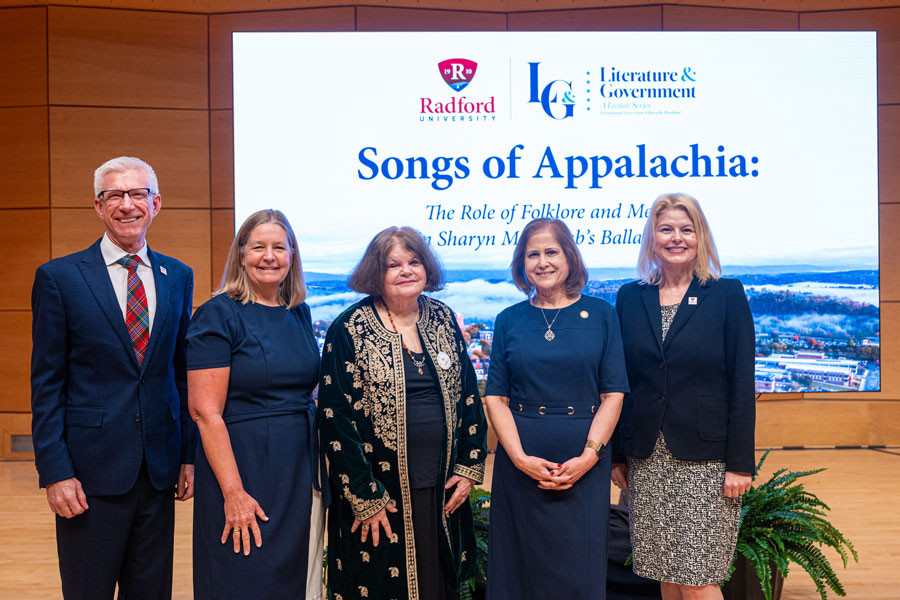
The event featured additional commentary from Courtney Watson, professor of English at Radford University, and from Sharyn McCrumb herself. Watson noted the novels “teach us there is much to learn from Appalachian stories and folklore, and the ways we can carry the past with us to build a future that is better for everyone in the region we love so much.”
McCrumb thanked the speakers and the audience for appreciating the deeper meaning of her work. She described her characters as caught in many ways between life and death, traveling on different journeys – all inhabiting and moving through a region that itself is contradictory and rests between different regions and lifestyles. Of Appalachia, she said, “We are the liminal state and a magical place.”
During a question-and-answer session, Hashmi noted the relevance of these themes to executive and legislative efforts to support the people of Appalachia – especially in partnership with local government and institutions. “It really does require a comprehensive partnership between government, community and what’s happening on the ground,” she said.
On a personal level, she added that having grown up in a small rural community near Savannah, Ga., she identified strongly with the characters in the novel. “The lives that are depicted in McCrumb’s novels are people who I grew up with and I understand,” she said.
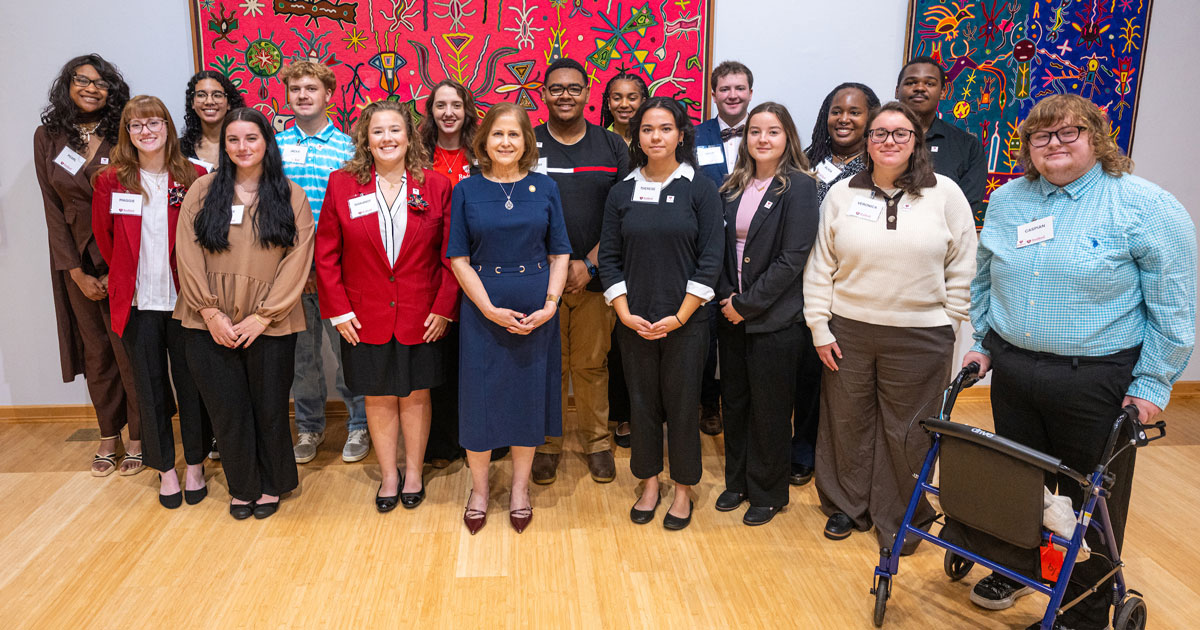
During her visit, Hashmi also held a discussion with a group of Radford University student leaders. She also toured facilities in the College of Nursing and the Davis College of Business and Economics.
“Radford University was honored to welcome Lieutenant Governor Hashmi and to be part of this important conversation about Appalachian literature, culture and memory. The opportunity to have Sharyn McCrumb with us made the occasion especially meaningful for our students, faculty and community,” said President Bret Danilowicz.