
Artist Melissa Schappell credits her Radford education with important development that has brought success. Learn more about Melissa's experience at Radford University.
Art & Graphic Design
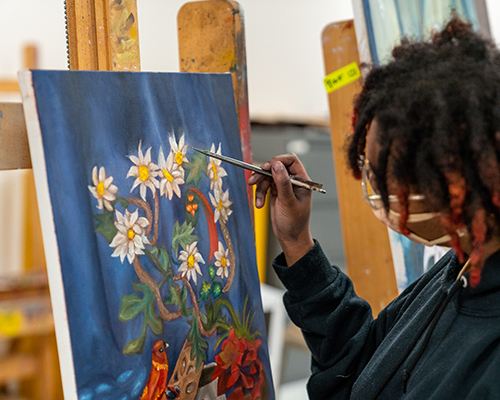
Studio Art
Concentration
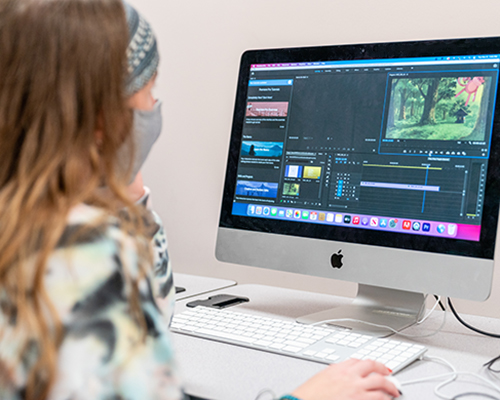
Graphic Design
Concentration
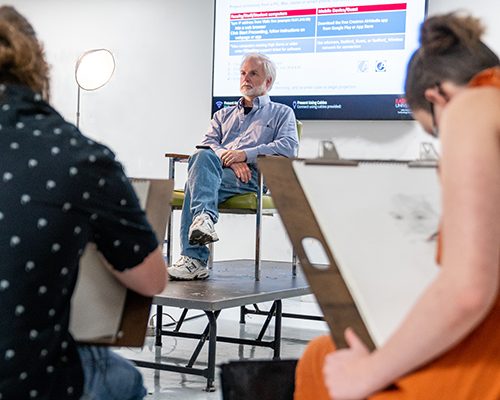
Art Education
Concentration
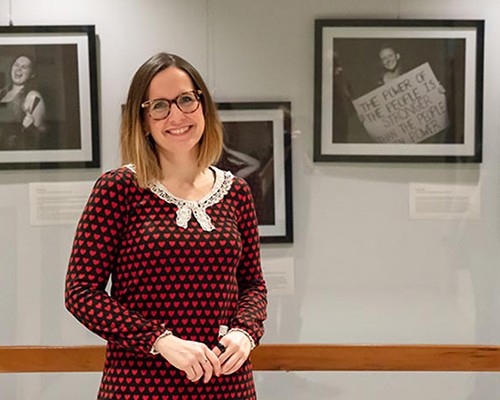
Art History & Museum Studies
Concentration

Begin your journey in the Arts at Radford University
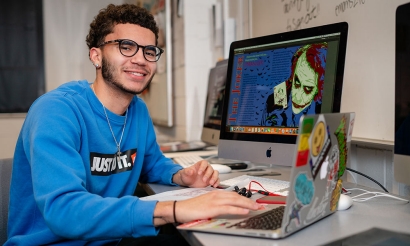
Art encompasses how we create, see, think, feel, and experience. Art captures what it means to be alive in a particular place, time, culture, mind, and body.
Students in art courses learn how to create images and objects that express personal, cultural, or commercial ideas. They connect with and respond to influential artists, designers, and thinkers from diverse cultures and historical periods, and they explore human themes like beauty, politics, and identity. By making, interpreting, and analyzing art, you gain ways to know yourself, express ideas, and understand people and cultures, of today and yesterday.

Professional Training
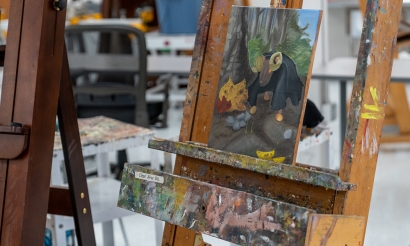
Art benefits all. Students receive training to become
- Artists
- Designers
- Curators
- Gallerists
- Teachers
- Art therapists
- Creative entrepreneurs

Why Radford?
Radford University is one of only five institutions in Virginia accredited by the National Association of Schools of Art and Design (NASAD).
NASAD is the top national accrediting agency for art and design programs, and accreditation recognizes high quality instruction, facilities, and support. Fewer than 350 schools in the nation have received this prestigious accreditation!

Hear from our renowned faculty

Coming Soon: State-of-the-Art Complex
At 178,000 square feet, the Artis Center for Adaptative Innovation and Creativity will be the largest academic building on campus. Classes are anticipated to be held in the new facility starting in the Fall 2024 semester.
News & Events
-
Record attendance for student art show »
3/1/2024

Two hundred guests attended the 2024 Juried Student Art Show, a number believed to be a record for this event.
-
Mini-grants go a long way for CVPA students »
2/12/2024

Recently, three professors in the College of Visual and Performing Arts received small cash grants to aid in their classroom efforts.
-
High school art show expands »
2/9/2024

Each spring, the Radford University Art Museum offers regional high school students an opportunity to share their work and compete for accolades and cash prizes. With more students receiving part or all of their education online these days, the event has recently seen expanded participation from virtual students.
-
Ben Duke's abstract realism arrives in January »
1/11/2024

Artist Ben Duke's exhibition, A Situation of Meanings, brings two decades of work in abstract realism to Radford University's Art Museum.
-
Student Judges Turn the Tables »
10/24/2023

On October 25, Radford University’s Tyler Gallery will host an all student-juried exhibition of art created by the university faculty and staff called Look What We Made!
-
More to This than Just Making Stuff »
10/17/2023

Senior Studio Art major Dylan DeLuca arrived at Radford with skills. As he prepares to enter his final semester, he's leaving with a vision, a practice and a community.
Through the guidance of my mentors, I was able to experiment and take risks that inevitably led to my work being more sculptural, dimensional, loose and interactive."